Rio's Water Is Still Full Of Filth And Viruses

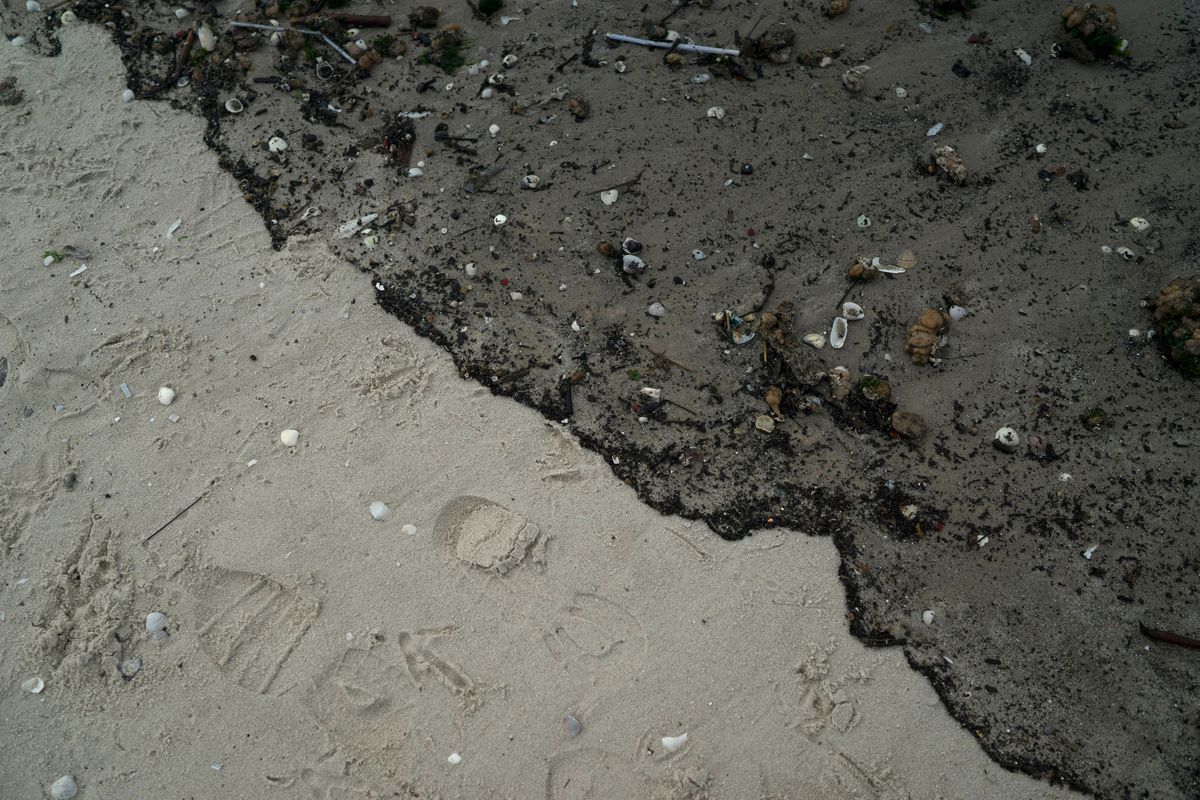
The Summer Olympics begin in four days in Rio de Janeiro, and the city’s waterways are still so dirty that one expert is recommending that anyone who visits the city should avoid putting their head under water.
That warning comes from Dr. Valerie Harwood, chair of the department of integrative biology at the University of South Florida, who spoke to the Associated Press, which recently concluded a second round of testing on Rio’s waterways and beaches. A year ago, the AP found Rio’s water to be laden with alarmingly high levels of sewage and to be riddled with viruses. Rio’s attempts to clean up the water fell well short, and the AP has found that the athletes and tourists who will be swimming in the water will do so among a high concentration of pathogens.
The problem today is the same as it was last year: Although Rio has managed to reduce the level of bacteria in the water, there has been no progress in eliminating dangerous viruses. From the AP:
But there’s a growing consensus that [bacterial tests are] not ideal for all climates, as bacteria break down quickly in tropical weather and salty marine waters. In contrast, viruses have been shown to survive for weeks, months or even years — meaning that in tropical Rio low bacterial markers can be completely out of step with high virus levels.
That disparity was borne out in the AP’s testing. For instance, in June, 2016, the levels of fecal coliforms in water samples from Copacabana and Ipanema Beaches were extremely low, with just 31 and 85 fecal coliforms per 100 milliliters, respectively. But still, both had alarming readings for rotavirus, the main cause of gastroenteritis globally, with 7.22 million rotaviruses per liter detected in the waters of Copacabana, while 32.7 million rotaviruses per liter were found in the waters of Ipanema Beach.
Even the supposed improvements in bacterial contamination could be a mirage. The AP reports that many of Rio’s beaches have fallen short of the state’s own standards for bacterial contamination on numerous occasions, and Brazilian virologist Dr. Fernando Spilki believes the periodic drops in the level of contaminants has more to do with climatic conditions than cleanup efforts.







Britney’s HCL Saga Shows How Murky High Stakes Poker Is

5 Fights the UFC Should Make After Rosas Jr. vs. Barcelos


- MLB Playoff Futures: Three Best Bets for the 2026 Postseason
- Eagles vs. Bears MNF Week 3 Betting Total Picks and Predictions
- Rams vs. Broncos Sunday Night Football Best Betting Pick
- MLB Best Bets: Three Picks for the Final Day of the Regular Season
- UFC Vegas 121 Underdogs: Why Alatengheili Is Worth a Look at +300
- UFC Vegas 121 Predictions: Best Bets for Saturday’s Fight Card
- UFC Vegas 121 Line Movement: Two Betting Favorites Have Completely Flipped